
Something has shifted in how technical products compete. A few years ago, building something genuinely good was enough to get traction - word spread in developer communities, GitHub stars turned into users, and growth followed product quality fairly naturally. That dynamic hasn't disappeared, but it's gotten a lot harder to rely on. The market is more crowded, attention is more fragmented, and AI tools have made it easier than ever to ship fast, which makes the gap between a great product and a visible one wider.
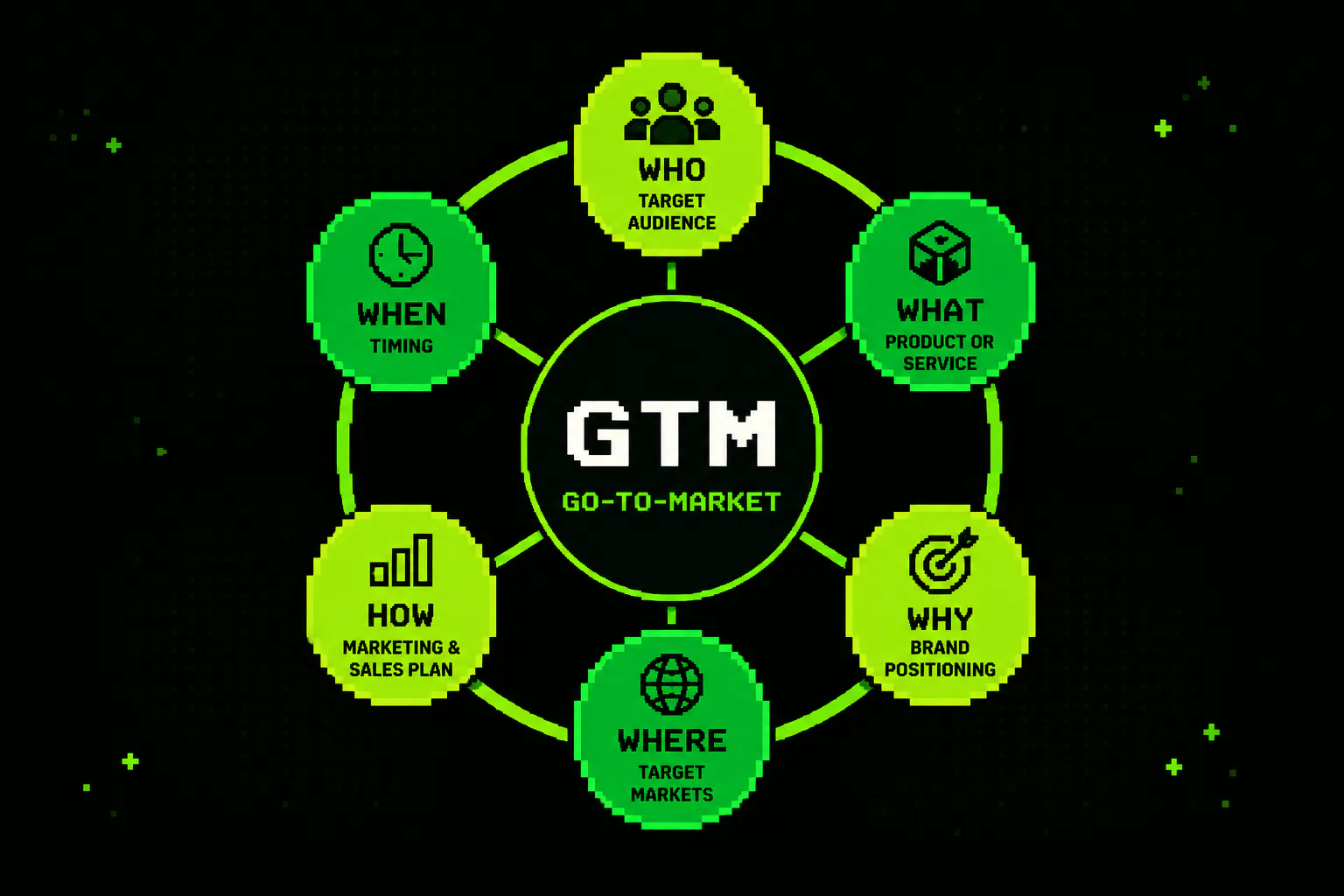
This is where go-to-market strategy comes in. GTM is the connective tissue between what you've built and who actually uses it: your positioning, your messaging, how you reach the right audience at the right moment, and how you build the kind of trust that converts interest into revenue. In short, it's an ongoing operating system that runs in parallel with the product, not after it -
Engineering-led teams are often exceptional at building, however GTM thinking tends to be foreign territory because it requires a completely different set of instincts; and when those instincts are missing, the same patterns keep showing up.
Here's where most engineering-led teams go wrong
Mistake #1:Shipping the product before anyone knows it exists
GTM gets treated as a post-launch task rather than something that runs in parallel with the build. By the time the product ships, the audience-building work is months behind and the launch lands with a whisper.
Mistake #2: Letting the README double as the marketing copy
Technical documentation tells you how a thing works. It does almost nothing to tell a buyer why they should care, what problem it solves first, or who it's actually for. These are different jobs, and conflating them costs conversion.
Mistake #3:Treating the dev community as a later-stage concern
Developer trust compounds slowly. Brands that start showing up in technical conversations early by publishing, contributing, being genuinely present, have a structural advantage by the time they need that community to care.
Mistake #4: Measuring GTM success only by direct attribution
Engineers are comfortable with measurable causality, which is a feature in product development and a liability in GTM. A blog post someone read six months before signing up, a citation in an AI answer, a recommendation in a Slack channel - none of these fit neatly in a last-click model. The instinct to cut what can't be tracked reliably kills the channels that compound most.
Mistake #5:Assuming technical depth is enough to drive word of mouth
Engineering teams build reach in developer communities by publishing their thinking through architecture decisions, honest comparisons, and failures, which works alongside a great product to simultaneously drive both content distribution and technical credibility.
Mistake #6: Conflating SEO with content strategy
Ranking on Google and being trusted by developers are increasingly different outcomes. AI search surfaces content from platforms it already cites which means a genuinely brilliant post on an unknown domain can get far less reach than the same thinking published somewhere with established authority. The distribution layer has changed, and a lot of content strategies haven't caught up.
Mistake #7:Building in public without a platform strategy
Posting on X or LinkedIn primarily reaches your existing followers, whereas publishing on a platform with an established technical readership introduces your thinking to an entirely new audience and ensures long-term visibility as the content gets indexed, cited, and surfaced long after the initial publication date.
Mistakes 6 and 7 have the same fix: publish on a platform that already has the audience, the authority, and the citation footprint you're trying to build.
That's what
Start publishing where technical audiences already pay attention

Rather talk it through? Book a meeting with our team!
We'll walk you through what a publishing strategy on HackerNoon looks like for your brand.